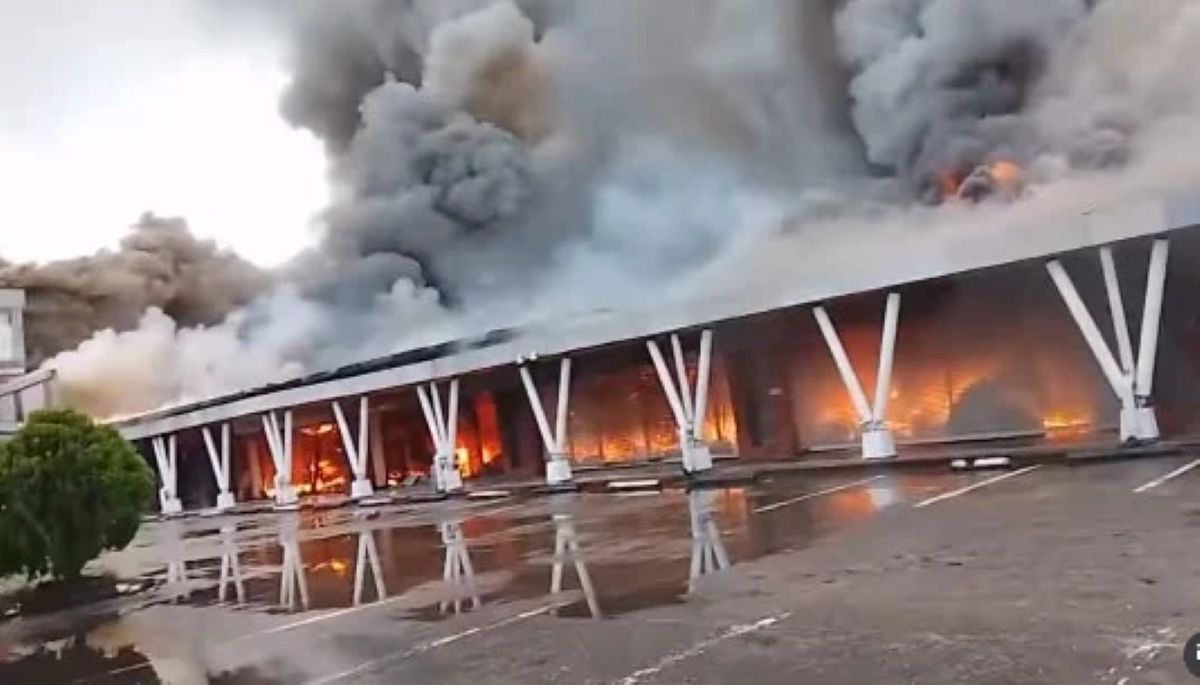
A fire outbreak at the popular SPAR Mall in Calabar, Cross River State, has renewed concerns about fire safety in shopping centres and other busy commercial facilities across Nigeria.
The blaze, which reportedly occurred on Saturday morning, August 22, 2026, affected several businesses within the mall, including a pharmacy, clothing store, perfumery and phone shop. Reports indicated that goods and property worth millions of naira were destroyed in the incident.
The situation reportedly triggered panic among workers and business owners, with eyewitnesses describing emotional scenes as people tried to rescue merchandise and protect their livelihoods from the spreading flames. Fortunately, no loss of life was reported.
Authorities reportedly suspected an electrical fault, with police also pointing to a possible small explosion linked to the incident. Firefighters were said to have encountered operational challenges during the response, with reports indicating that only one of three available fire trucks was working at the time.
Although the precise cause and circumstances of the fire are expected to be established through investigation, the incident offers an important lesson for every business owner and facility manager: a fire can move from a seemingly minor electrical problem to a major commercial disaster remarkably quickly.
Electrical faults can occur for several reasons, including overloaded circuits, damaged cables, loose connections, defective equipment, overheating components and poor electrical installations. In a shopping centre or retail environment, the potential danger can be amplified by the amount of combustible material present.
Clothing, cardboard boxes, plastics, paper products, furniture, packaging materials, cosmetics and other merchandise can provide fuel for a rapidly developing fire. Once flames begin spreading between shops or sections of a building, controlling the situation can become increasingly difficult.
This is where early fire detection becomes critical.
A properly designed fire alarm and detection system can provide an early warning when smoke, heat or other signs of fire are detected. Instead of relying on someone to notice flames manually, an engineered detection system can alert occupants and relevant personnel as soon as dangerous conditions are identified.
Depending on the building and its fire risks, a comprehensive system may include smoke detectors, heat detectors, manual call points, fire alarm control panels, sounders, visual indicators and other specialized detection technologies.
The objective is simple: detect the danger early, raise the alarm quickly and give people more time to respond safely.
However, fire protection should not be reduced to simply installing smoke detectors or placing extinguishers around a building. Commercial properties require a coordinated approach based on the building’s design, occupancy, activities and specific hazards.
An electrical room, for example, may have different fire risks from a clothing shop, warehouse, kitchen, server room or storage area. Each environment should therefore be assessed appropriately when designing a fire protection system.
Fire suppression is another important part of the equation. Depending on the facility and applicable requirements, businesses may require fire extinguishers, hose reels, hydrant systems, automatic sprinkler systems or specialized suppression solutions.
Fire extinguishers can provide an important first line of defence against appropriate small fires, but they must be correctly selected, properly positioned, regularly inspected and used only when it is safe and appropriate to do so.
More importantly, fire safety equipment must actually work when needed. A neglected fire alarm system, expired extinguisher or poorly maintained emergency system can create a false sense of security.
Regular inspection, testing and maintenance should therefore be part of every property’s fire safety programme.
Business owners should also ensure that emergency exits are clearly identified and kept unobstructed. Employees should know how to respond when a fire alarm sounds, where to assemble after evacuation and how to contact emergency services.
For larger facilities, regular fire drills and staff training can further improve emergency preparedness.
The financial consequences of a serious commercial fire can be devastating. A business can lose its stock, equipment, documents and infrastructure within a short period. Even when nobody is injured, prolonged closure can result in lost revenue, damaged customer relationships and expensive rebuilding costs.
The reported destruction at SPAR Mall in Calabar is therefore more than a news event. It is a reminder that fire safety is an investment in business continuity and the protection of lives and property.
For shopping centres, offices, supermarkets, warehouses, factories, hotels, schools and residential properties, the right fire protection strategy should begin long before an emergency occurs.
At SafetechHub, we provide fire safety and security solutions designed to help businesses and property owners strengthen their protection against fire and other security risks. Our solutions include fire alarm and detection systems, fire extinguishers and related fire safety equipment, as well as security solutions for different types of properties.
The best time to discover a weakness in your fire protection system is before a fire exposes it.
Detect early. Alert quickly. Protect what matters.
For professional fire safety and security solutions, contact SafetechHub:





 chat with us